
 Opinion
Antimicrobial resistance (AMR):
a human-accelerated crisis
24 NOV 2026

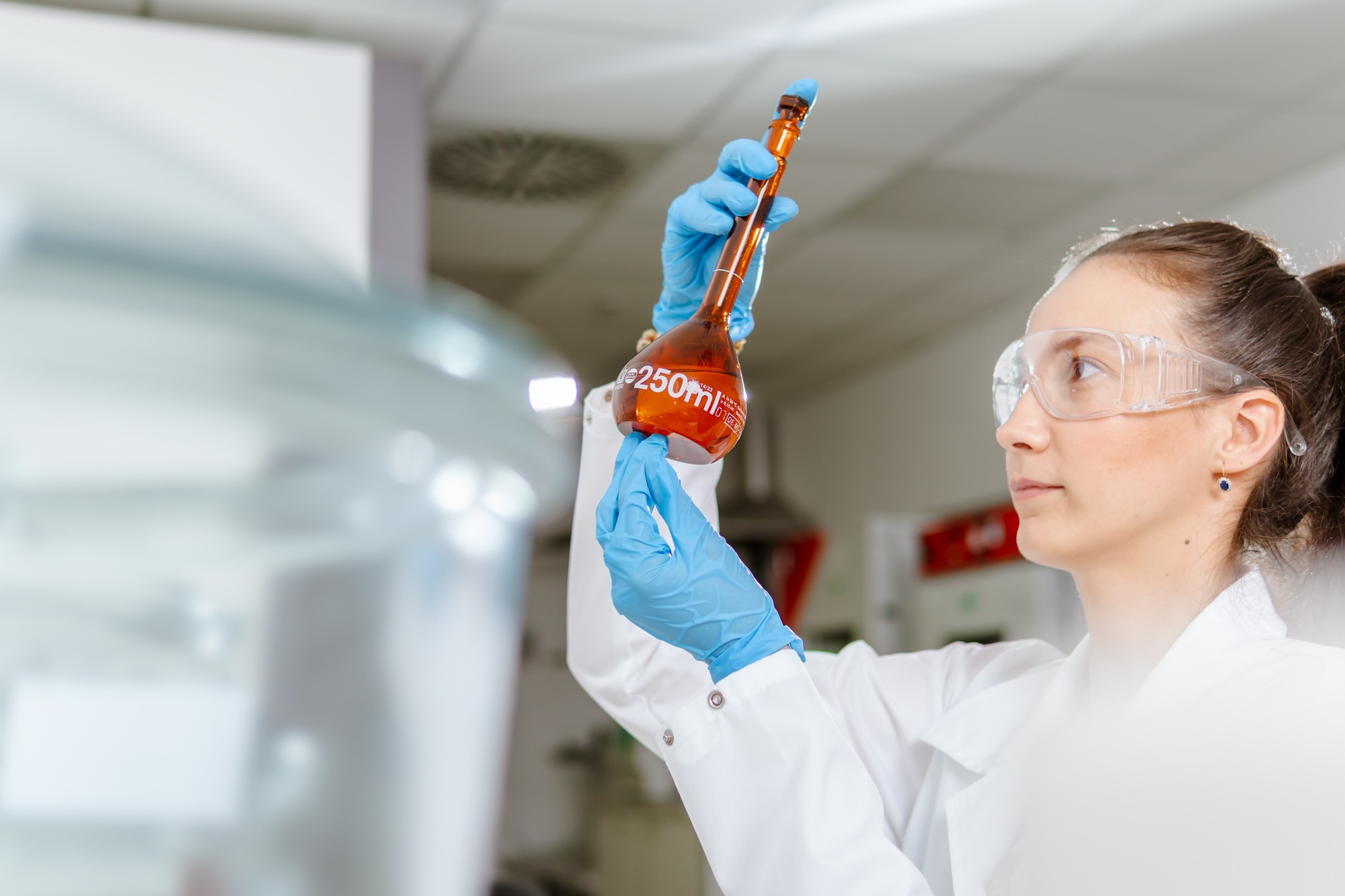
Last-resort antibiotics are running out of road.
Protecting them is a job for all of us.
Since Alexander Fleming discovered penicillin, we have languished in the lap of luxury, assuming that any infection we get can be treated by doctors and our recovery guaranteed. However, bacterial infections build resistance to treatment and change to evade even our most effective treatments. Even worse, antimicrobial resistance (AMR) is a crisis of our own making, through antibiotic over-prescription, not just in the human medical environment but exacerbated by overuse in the veterinary world[1].
Whilst we are in a race against the mutations of the bacteria that cause infection, new drugs can take many years to reach patients. A study in The Lancet Regional Health – Europe showed that the median time from first phase 1 trial to EMA marketing authorization for infectious disease medicines and vaccines was 7.3 years[2]. Developing a new antibiotic is a lengthy, high-risk and expensive process. A 2021 analysis in Health Affairs highlights the substantial financial incentives required to make investment in innovative antibiotics commercially viable, including the importance of post-approval costs[3]. A further challenge for antibiotic development is caused by the increase in resistance. With a focus on responsible use due to AMR, annual sales for antibiotics generate far less revenue than the investment required to develop them[4]. In the meantime, we are burning through our last-line-of-defense treatments and, with increasing supply uncertainty, risk losing access to them altogether.
The background
As a company that focuses on critical medicines, we operate to ensure that drugs are available when patients need them. When you are faced with a life-threatening infection, two things matter: are the antibiotics I need available, and will they work. This is no longer a simple question to answer.
Penicillin resistance in Staphylococcus aureus was already being documented in the 1940s[5]. By the mid-1960s, a Copenhagen study of S. aureus blood isolates conducted from 1957 to 1966, demonstrated that 85% to 90% of hospital isolates and 65% to 70% of community isolates were penicillin-resistant[6].
More recently, a 2024 peer-reviewed analysis in The Lancet forecasts that by 2050, bacterial AMR could be associated with about 8.22 million deaths a year, of which about 1.91 million would be directly attributable to resistance[7].
Doctors are aware of the challenge, as they face it directly. Whether at the GP surgery or in a hospital setting, ‘Can’t you just give me some antibiotics?’ is a question they are often asked. Despite global challenges, European surveillance data have demonstrated encouraging shifts towards more prudent antibiotic use in several countries, with statistically significant reductions in antibiotic consumption documented in eight European countries between 2014 and 2018[8]. While European countries have implemented measures to promote responsible antibiotic use, recent ECDC surveillance data demonstrate that progress remains uneven, highlighting the need for continued efforts to improve antibiotic stewardship[9]. But one area of the world alone cannot manage this challenge. We need a coordinated effort across the globe to ensure that we can continue to use the treatments we have before further resistance arises.
The supply chain conundrum
According to a 2021 review, over the preceding 30 years, 15 of the 18 largest global pharmaceutical companies have abandoned antibiotics[10]. The financial constraint for manufacturing these critical drugs means that many of them are now made outside traditional western manufacturing locations. And as we know with the way that our fragile trading relationships have been disrupted in the last few years, being reliant on one country for supply is not in the interests of patients.
Xellia is one of the few companies left manufacturing non-beta-lactam fermentation antibiotics in Europe. It’s a specialized process and something that we have been doing for 120 years. But even that expertise is increasingly threatened. Currently, four of our APIs (vancomycin, colistimethate sodium, polymyxin B and amphotericin B) are the active ingredients of medicines on the WHO Model List of Essential Medicines, 24th list (2025)[11]. They are products that are the last-resort treatments for serious infections, when all other treatments have failed. Let that sink in for a moment.
Our CEO, Michael Kocher, has turned around Xellia to drive it into profit, but he recognizes that we cannot keep going alone. He sees the economic challenge playing out in front of us and is looking to the European Union to ensure that there is incentivization for new state-of-the-art manufacturing and R&D facilities in Europe. He argues that we should see antibiotic treatments as a defense issue and ensure that they get the same level of funding, and not just regard it as a healthcare issue.
How do we break the cycle
Perhaps we need to take a more holistic approach to AMR by taking a four-step approach: building awareness, creating responsible use, building supply resilience, and creating innovation.
The first step is to understand and raise awareness around AMR. There are many companies and researchers coming together through organizations like the AMR Industry Alliance and the BEAM Alliance, alongside organizations looking at specific disease threats, like the Global Sepsis Alliance.
Coordinating the efforts of the alliances and the companies producing the treatments would be a powerful way to tell the AMR story.
Secondly, we need patients to understand that they don’t need antibiotics for everything and that this precious resource needs to be saved for when other courses of action don’t work. We need healthcare organizations globally to ensure that medicines are never used unnecessarily. We also need to educate patients to take medications ‘as directed by your doctor.’ Unfortunately, adherence is a challenge. But regular reminders about responsible use mean that we may be able to help preserve the medications we have currently for future generations.
So, we raise awareness and educate, but what happens if, after all that, we have no drugs? Resilient manufacturing is crucial to our supply chains. Ensuring independence of supply and fair levels of access is vital to world health and as suggested earlier, this is as crucial as a defense system to national security. In August 2025, the US moved to build a strategic reserve of active ingredients for critical medicines[12]. Supply resilience is now firmly on the political agenda. All countries need to consider how they would cope if critical medicines could not be given to patients.
Finally, we need new and innovative molecules that can overcome emerging resistance and protect patients. After the golden age of antibiotic discovery (1940s – 1960s), a long innovation void followed, with the last major new class discovered in 1987[13]. Even when we do find a potential new molecule, it can take many years to reach patients, as navigating the complex and costly drug development process means some will never make it.
Final Word
If you have made it to the end of this article, you are probably wondering how on earth we are going to survive. What made us healthy 30 years ago might not be an option now. But if there is one thing human beings have excelled at over the past millennium, it’s being tuned into what really matters and fighting for it. And the desire is there. Now we need the support and political will to support the scientists, alliances, and companies who want to keep us healthy well into the next millennium.
Watch the video here: AMR: A threat you can't ignore
References
[1] Executive Order 14336 of 13 August 2025. Ensuring American Pharmaceutical Supply Chain Resilience by Filling the Strategic Active Pharmaceutical Ingredients Reserve. https://www.whitehouse.gov/presidential-actions/2025/08/ensuring-american-pharmaceutical-supply-chain-resilience-by-filling-the-strategic-active-pharmaceutical-ingredients-reserve/ (accessed 9 November 2026)
[2] Silver LL. Challenges of antibacterial discovery. Clin Microbiol Rev. 2011;24(1):71-109. doi:10.1128/CMR.00030-10
[3] Dutescu IA, Hillier SA. Encouraging the development of new antibiotics: are financial incentives the right way forward? A systematic review and case study. Infect Drug Resist. 2021;14:415-434. doi:10.2147/IDR.S287792
[4] The selection and use of essential medicines, 2025: WHO Model List of Essential Medicines, 24th list https://iris.who.int/server/api/core/bitstreams/17642505-ecd3-4940-a691-4f1dfa0d835a/content
[5] https://www.ecdc.europa.eu/en/news-events/new-study-who-europe-and-ecdc-examines-variations-antibiotic-consumption (accessed 24 November 2026)
[6] https://www.ecdc.europa.eu/sites/default/files/documents/ESAC-Net-AER-2024_rev2.pdf
[7] Lowy FD. Antimicrobial resistance: the example of Staphylococcus aureus. J Clin Invest. 2003;111(9):1265-1273. doi:10.1172/JCI18535
[8] Jessen O, Rosendal K, Bulow P, Faber V, Eriksen KR. Changing staphylococci and staphylococcal infections: a ten-year study of bacteria and cases of bacteremia. N Engl J Med. 1969;281:627-635. As cited in: Chambers HF. The changing epidemiology of Staphylococcus aureus? Emerg Infect Dis. 2001;7(2):178-182. doi:10.3201/eid0702.010204
[9] Naghavi M, Vollset SE, Ikuta KS, et al. Global burden of bacterial antimicrobial resistance 1990-2021: a systematic analysis with forecasts to 2050. Lancet. 2024;404(10459):1199-1226. doi:10.1016/S0140-6736(24)01867-1
[10] Van Boeckel TP, Brower C, Gilbert M, et al. Global trends in antimicrobial use in food animals. Proc Natl Acad Sci USA. 2015;112(18):5649-5654. doi:10.1073/pnas.1503141112
[11] de Jong HK, Hermans SM, Schuitenmaker SM, et al. Factors associated with acceleration of clinical development for infectious diseases: a cross-sectional analysis of 10-year EMA registration data. Lancet Reg Health Eur. 2024;43:100983. doi:10.1016/j.lanepe.2024.100983
[12] Outterson K. Estimating the appropriate size of global pull incentives for antibacterial medicines. Health Aff (Millwood). 2021;40(11):1758-1765. doi:10.1377/hlthaff.2021.00688
[13] Anderson M, Panteli D, van Kessel R, Ljungqvist G, Colombo F, Mossialos E. Challenges and opportunities for incentivising antibiotic research and development in Europe. Lancet Reg Health Eur. 2023;33:100705. doi:10.1016/j.lanepe.2023.100705